Metal stamping for high-volume, tight-tolerance parts
Progressive, deep drawn and servo stamping up to 220 tons. Ajax sales engineers design the stamping process around your part so it runs efficiently, to spec and with little scrap.
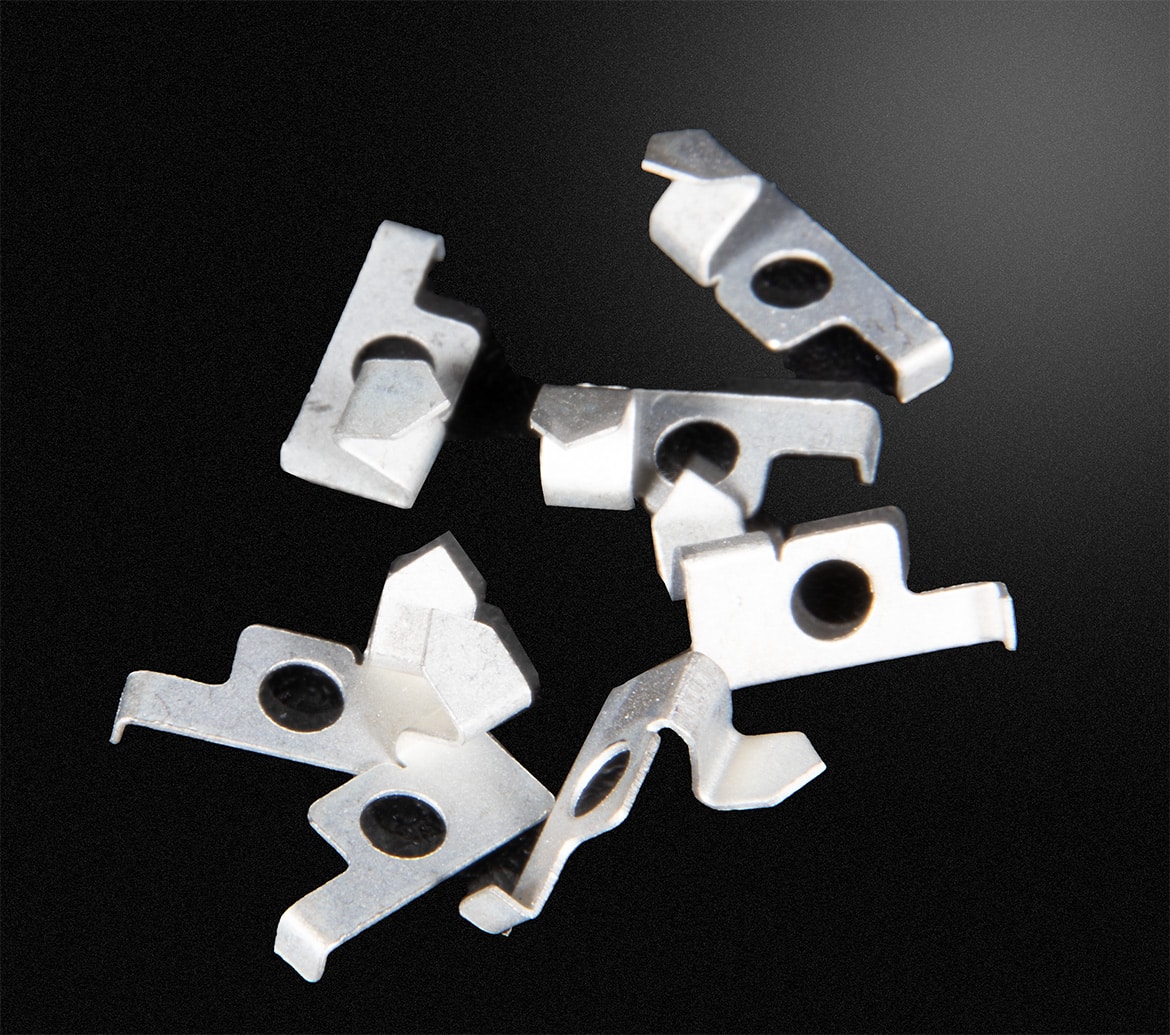
Three ways to stamp a part
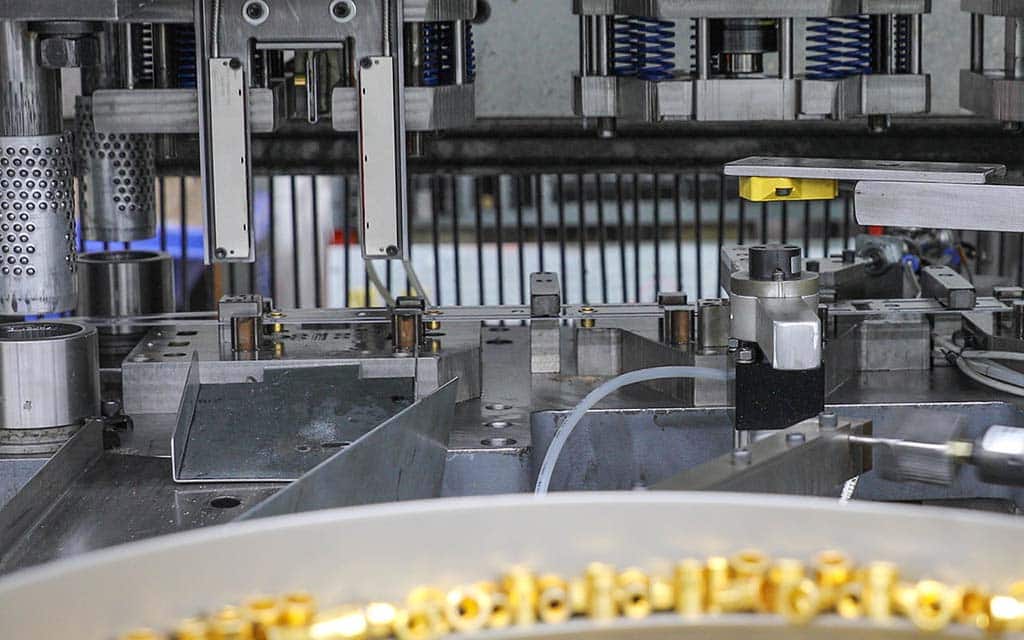
Ajax runs progressive stamping for long-run, high-volume parts, deep drawn stamping for hollow shapes, and servo presses where the ram motion needs to be programmed. The process is chosen and designed to meet the customer's specification.
Why stamp instead of fabricate
For high-volume manufacturing, stamping gives economies of scale that fabrication cannot. Dies cost more up front, but they pay off with long tool life and very low per-part cost once in production.
Dies built under the same roof
The in-house tooling department designs, builds and repairs the die sets, so Ajax does not wait on third-party vendors. That cuts lead time and overall cost.
Metals commonly stamped at Ajax
Material choice affects tooling, production speed, part quality and project cost. Ajax sales engineers hold Class A journeyman credentials.
- Aluminum
- Lightweight, corrosion resistant and highly formable, with good thermal and electrical conductivity. Marine applications, exterior construction components, device enclosures.
- Carbon steel
- Economical, strong, versatile and highly formable. Hinges, fasteners, clips and brackets.
- Stainless steel
- Corrosion resistance, durability and strength. Medical instruments, food-grade equipment and electronic components.
- Galvanized steel
- Zinc-coated carbon steel for economical corrosion resistance. Building components, brackets and outdoor hardware.
- HSLA steel
- High yield strength with formability, durability and weldability. Structural members, construction elements and safety-critical automotive components.
- Copper
- Electrical and thermal conductivity, easy forming and corrosion resistance. Heat exchangers, circuit board components and electrical connectors.
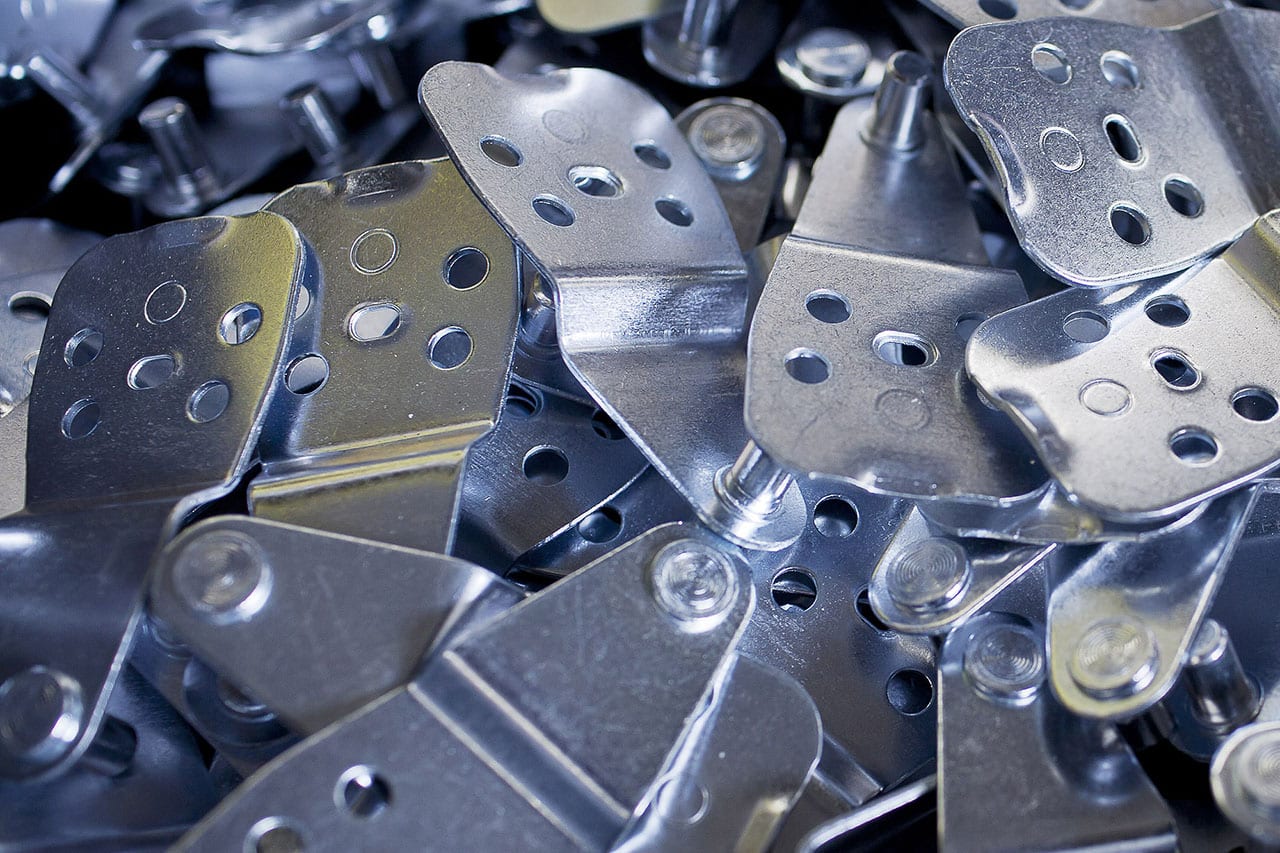
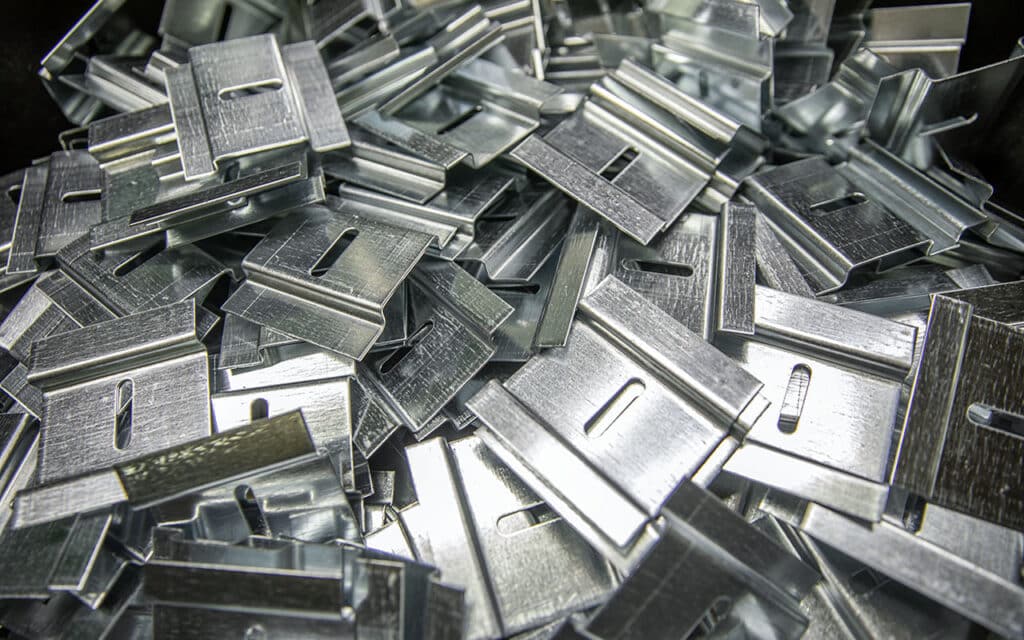
Common questions
Why choose metal stamping?
For high-volume manufacturing, stamping delivers economies of scale that fabrication cannot match. Tooling is expensive up front but gives long tool life and very low per-part cost. With CNC controls or servo presses, stamping holds very tight tolerances with consistent repeatability.
Which industries use Ajax stamping?
Appliances, air movement and control systems, construction, architecture, medical devices and electrical products.
What materials can be stamped?
Commonly aluminum, carbon steel, stainless steel, galvanized steel, high-strength low-alloy (HSLA) steel and copper. An Ajax sales engineer will help match the material to the application.
What finishing and assembly does Ajax offer?
Powder coating, anodizing, electro-polishing and plating. Ajax also assembles products with fastening hardware and robotic welding, and kits related parts together for the customer's own assembly line.
How does Ajax check quality?
Inspection runs from hand-held digital micrometers and calipers to laser scanning. Progressive stamping lines also use laser measurement, visual inspection and in-line sensors to catch and correct problems during the run.
Get a quote: Metal stamping
Would you rather arrange a call? Quoting and sales engineering: 763-571-1660 or 763-277-7760.
- The part: a drawing, print or 3D model if you have one.
- Material, thickness and finish.
- Annual volume, lead time and delivery location.