Progressive stamping for long-run, high-volume parts
Coil is fed through a progressive die set that performs a series of operations automatically and continuously. The result is consistent output, fast production and very little wasted material.
How it works
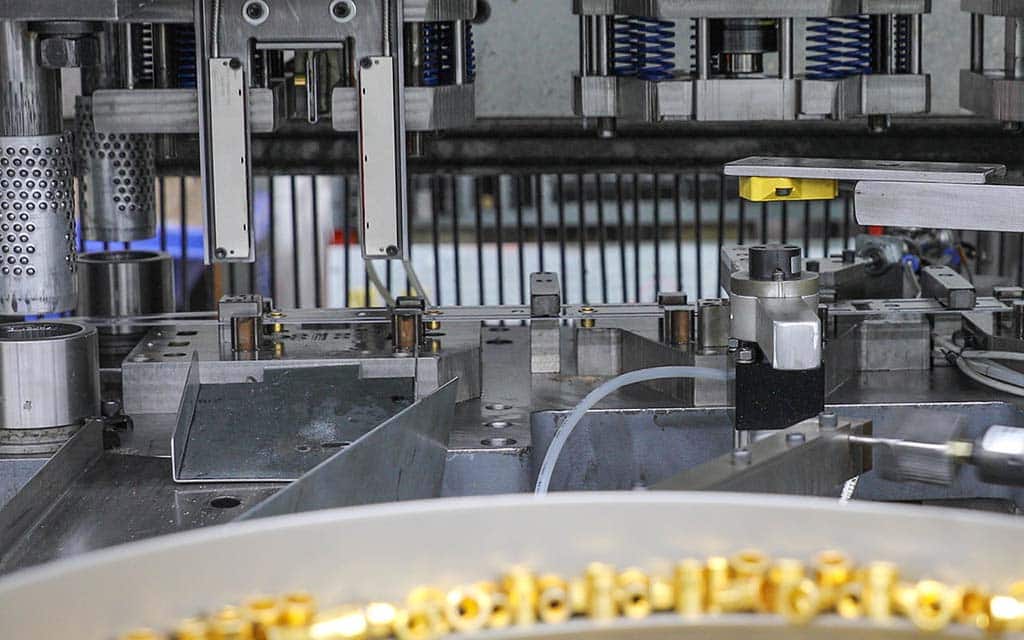
Metal strip enters the press through a feeder that decoils and straightens the material before it reaches the die set. The feeder may also apply vanishing oil to reduce die wear. A skilled press operator can produce thousands of uniform parts in a short time.
Where it fits
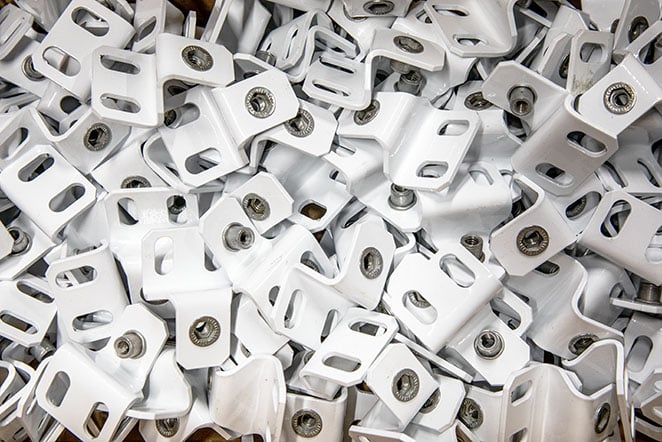
Progressive stamping suits complex parts made at scale, such as parts that need brass, bowl-fed hardware inserted in the die. Ajax runs it for transportation, medical, electronics and other industries.
The hard part is the tooling
Good die sets need investment, careful design and regular maintenance. The Ajax tooling department builds and maintains them in-house, and CNC machinists make the dies and program the presses and coil feeders.
Progressive stamping case studies
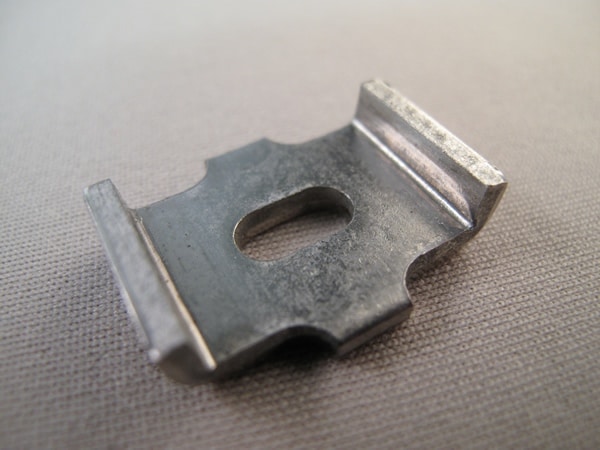 Progressive stampingHigh volume appliance part: 304 stainless replacedMaterial cost cut by 50 percent. 10 million parts at 0 PPM.
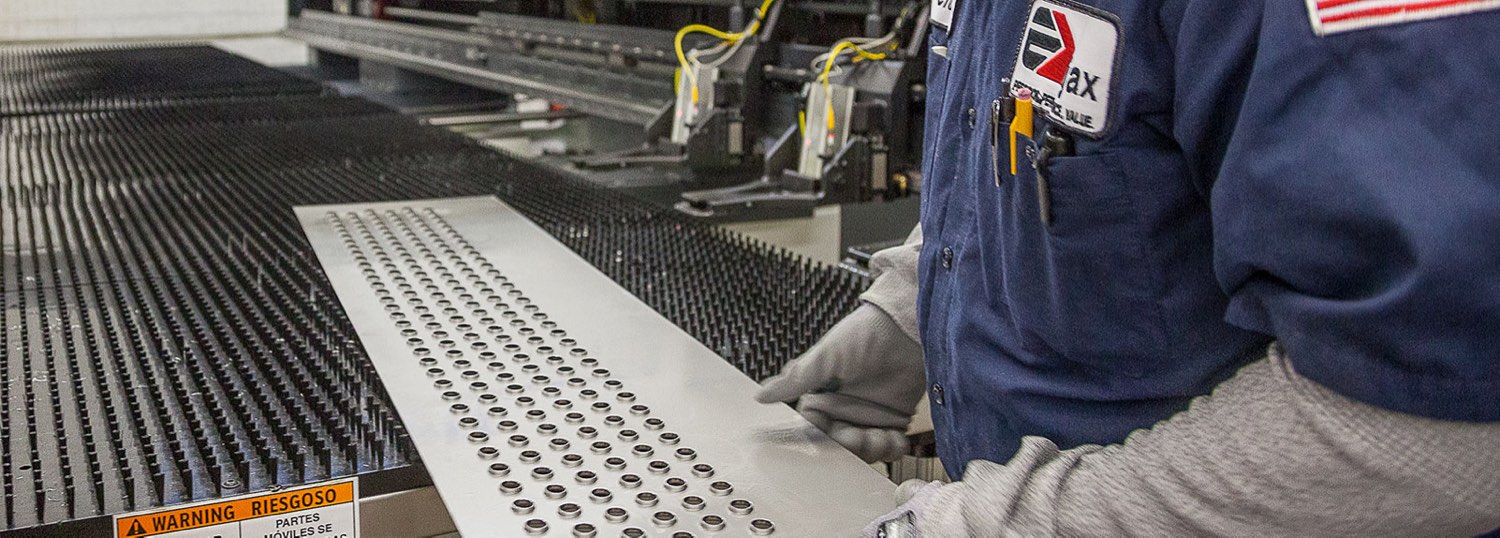 Progressive stampingResidential HVAC header plateMoved from turret press to progressive stamping: $50,000 saved a year.
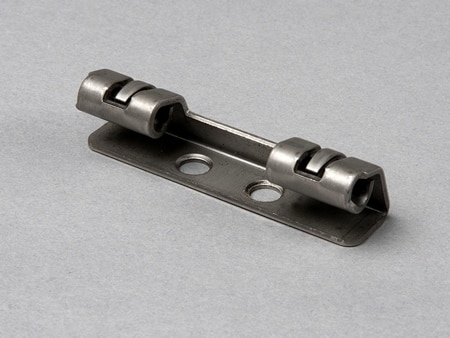 Progressive stampingCustom hinge with retained pinA European die-cast hinge remade as a progressive stamping. 25 years on, 100,000 a year.
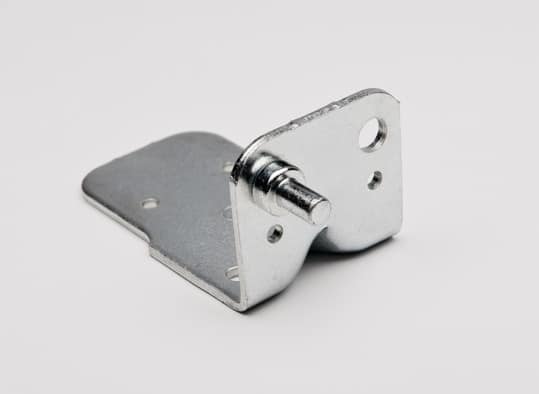 Progressive stampingAppliance door hinge: $250,000 saved a yearHeat treating, deburring and manual pin insertion eliminated. 0 PPM field failure.
Metals commonly stamped at Ajax
Material choice affects tooling, production speed, part quality and project cost. Ajax sales engineers hold Class A journeyman credentials.
- Aluminum
- Lightweight, corrosion resistant and highly formable, with good thermal and electrical conductivity. Marine applications, exterior construction components, device enclosures.
- Carbon steel
- Economical, strong, versatile and highly formable. Hinges, fasteners, clips and brackets.
- Stainless steel
- Corrosion resistance, durability and strength. Medical instruments, food-grade equipment and electronic components.
- Galvanized steel
- Zinc-coated carbon steel for economical corrosion resistance. Building components, brackets and outdoor hardware.
- HSLA steel
- High yield strength with formability, durability and weldability. Structural members, construction elements and safety-critical automotive components.
- Copper
- Electrical and thermal conductivity, easy forming and corrosion resistance. Heat exchangers, circuit board components and electrical connectors.
Common questions
Why choose progressive metal stamping?
It performs a series of stamping operations automatically and continuously, so it is far more productive than manual stamping. It reduces per-unit cost, non-compliance and material waste on high-volume parts.
What does progressive stamping demand from a supplier?
High-quality die sets, careful maintenance and CNC expertise. Ajax keeps tooling in-house rather than relying on third-party vendors, which shortens lead times and lowers cost.
What materials are used?
Commonly aluminum, carbon steel, stainless steel, galvanized steel, HSLA steel and copper.
What finishing and assembly does Ajax offer?
Powder coating, anodizing, electro-polishing and plating. Ajax also assembles products with fastening hardware and robotic welding, and kits related parts together for the customer's own assembly line.
How does Ajax check quality?
Inspection runs from hand-held digital micrometers and calipers to laser scanning. Progressive stamping lines also use laser measurement, visual inspection and in-line sensors to catch and correct problems during the run.
Get a quote: Progressive stamping
Would you rather arrange a call? Quoting and sales engineering: 763-571-1660 or 763-277-7760.
- The part: a drawing, print or 3D model if you have one.
- Material, thickness and finish.
- Annual volume, lead time and delivery location.